With Summer time coming into full swing, we have something to look forward to besides the 100 degree weather.. Fresh Produce!
The Athens Farmers Market brings fresh and local produce into the heart of Athens every Tuesday and Saturday. Not only are you supporting local farmers but the prices are low and the food is tasty.
On Tuesdays from 4-7pm you can find Little Kings, on Hancock Ave., bustling with vendors, arts, and live music. If you're looking for more of a variety of produce, be sure to catch the Farmers Market on Saturday Mornings 8am to Noon at Bishop Park off Oglethorpe Ave. for over 50 local vendors!
A variety of prepared food vendors such as Dondero's Kitchen, Luna Bread, and 1000 Faces Coffee are available as well.
For more information visit their website:
http://athensfarmersmarket.net/
Thursday, May 20, 2010
Wednesday, May 19, 2010
The Lurking Danger of Sink Holes
Yesterday on I-24 north of Chattanooga, TN a giant sink hole suddenly opened up that was 25 feet wide, 25 feet long, and 20 feet deep. Luckily no one was hurt but this got us thinking... What are the chances of this happening in your back yard?
Sink holes occur when the rock below the land surface is limestone , salt beds or a rock that can naturally be dissolved by groundwater. Caverns begin to develop as the rock below erodes thereby weakening the structural support of the rock. When these caverns get too big the land suddenly collapses, taking everything on top with it.
The most damage from sinkholes tends to occur in Florida, Texas, Alabama, Missouri, Kentucky, Tennessee, and Pennsylvania.While Georgia does not have a lot of the susceptible rock
we are not out of the clear yet! Many of the recent sinkholes are man made and are related to poor land use practices such as changing the natural water drainage patterns.
Sink holes don't have to be enormous to be destructive they can be just a few feet wide in your backyard.
Here are a few signs that you might have a sinkhole forming...
1. Cracks in interior joints around doors or windows,
2. Large depressions in your yard or street
3. Deep cracks and separation of paved walks and streets.
4. Sediment in your water
5. Observation of an actual cavity forming.
If you see any of these symptoms contact a landscape professional.
(ga.water.usgs.gov , sinkhole.org)
Sink holes occur when the rock below the land surface is limestone , salt beds or a rock that can naturally be dissolved by groundwater. Caverns begin to develop as the rock below erodes thereby weakening the structural support of the rock. When these caverns get too big the land suddenly collapses, taking everything on top with it.
The most damage from sinkholes tends to occur in Florida, Texas, Alabama, Missouri, Kentucky, Tennessee, and Pennsylvania.While Georgia does not have a lot of the susceptible rock
we are not out of the clear yet! Many of the recent sinkholes are man made and are related to poor land use practices such as changing the natural water drainage patterns.
Sink holes don't have to be enormous to be destructive they can be just a few feet wide in your backyard.
Here are a few signs that you might have a sinkhole forming...
1. Cracks in interior joints around doors or windows,
2. Large depressions in your yard or street
3. Deep cracks and separation of paved walks and streets.
4. Sediment in your water
5. Observation of an actual cavity forming.
If you see any of these symptoms contact a landscape professional.
(ga.water.usgs.gov , sinkhole.org)
Labels:
georgia soil conditions
Thursday, May 13, 2010
The Wonderful Rain Barrel
What are Rain Barrels and Why Use Them?
Water conservation is important to preserve our fresh water supply. There are many outdoor water-saving tips that can be used to help save on tap water use. One way is to use rain barrels or catchers to collect and store rainwater from rooftops for lawn and garden use. Rain barrels can also conserve water, help reduce water bills, and reduce pollution by reducing stormwater runoff. The water collected in the rain barrel would normally flow off the roof or through roof guttersRain barrels can be used to save water for plants during dry periods. They can also be arranged to slowly release the collected rain fall to areas that can soak up the water, reducing stormwater runoff and increasing groundwater recharge. The good news is that rain barrels are inexpensive, easy to install and easy to operate and maintain. Ready-made rain barrels can be purchased from local suppliers or on-line.
To Keep Garden Produce Safe, How Should I Use the Water Collected in the Rain Barrel?
As the water collected in the rain barrel is coming off a roof, into gutters and down downspouts, it is not considered to be “drinkable” or potable water. Remember, birds and animals are also on the roof. So, water from the roof can contain bacteria and other disease-causing organisms from bird and other animal waste that might be on the roof. How you use this water in your garden and the type of plants you use it on is an important consideration. Rain barrel water is fine if used to water non- edible plants – like flowers or lawns.
But Can I Use the Water In My Vegetable Garden ?
Yes, but only in the same way that other nonpotable water is used. Avoid using overhead irrigation.It is best to use this water for drip or trickle irrigation This prevents contamination of edible above the ground plant parts that are hard to clean, especially leafy greens. However, the vegetable is not safe to eat unless it is thoroughly washed using “drinkable” water first. Rain barrel water should not be used close to harvest time to water the vegetable garden and should NEVER be used to wash fruits or vegetables from the garden or orchard prior to consumption. (URI.edu)
Wednesday, May 12, 2010
The State Botanical Garden of Georgia
For those living in the Athens, GA area the State Botanical Garden of Georgia provides a great landscape resource for the community. With many different types of gardens, trails, and plant communities a visitor can spend a lot time immersed in nature. If learning is what you are looking for, the Botanical Gardens provide tons of educational opportunities for adults, kids, schools, camps and other organizations.
One of my favorite aspects of the Bot Gardens is its Heritage Garden which "contains plants of historic and socioeconomic interest to Georgia. Included in this garden are ornamentals such as heirloom annuals and perennials and antique roses; fruit crops such as apples, pears, and peaches; row crops such as cotton, tobacco, and peanuts; and a selection of plants native to Georgia."
Preserving historic landscape vegetation, and telling its story is an important part of any region's heritage...Thanks Bot Gardens!
.
One of my favorite aspects of the Bot Gardens is its Heritage Garden which "contains plants of historic and socioeconomic interest to Georgia. Included in this garden are ornamentals such as heirloom annuals and perennials and antique roses; fruit crops such as apples, pears, and peaches; row crops such as cotton, tobacco, and peanuts; and a selection of plants native to Georgia."
Preserving historic landscape vegetation, and telling its story is an important part of any region's heritage...Thanks Bot Gardens!
.
Tuesday, May 11, 2010
Olmstead park in Atlanta
One of the most revered and talented Landscape Architects was a man named Fredrick Law Olmstead (April 26, 1822 – August 28, 1903). Considered the 'father' of Landscape Architecture, Olmstead is credited with the design behind Central Park and Prospect Park in New York City. His design firm developed dozens of famous parks throughout the US and world.
The most notable in our area of Georgia is Olmsted Linear Park in Druid Hills, Ponce de Leon Ave. It is made of 50 acres of six distinct parks, strung along Ponce de Leon Avenue like a necklace. The parks were designed in the late 19th Century. Each of the six parks has its own name: Deepdene, Dellwood, Shadyside, Springdale, Virgilee and Oak Grove (formerly Brightwood).
The drive down Ponce through these historic parks makes for a beautiful Sunday afternoon.
The most notable in our area of Georgia is Olmsted Linear Park in Druid Hills, Ponce de Leon Ave. It is made of 50 acres of six distinct parks, strung along Ponce de Leon Avenue like a necklace. The parks were designed in the late 19th Century. Each of the six parks has its own name: Deepdene, Dellwood, Shadyside, Springdale, Virgilee and Oak Grove (formerly Brightwood).
The drive down Ponce through these historic parks makes for a beautiful Sunday afternoon.
Labels:
Atlanta Parks,
Fredrick Law Olmstead,
Park Design
Friday, May 7, 2010
Meet the Eastern redbud
According to Wikipedia "In some parts of southern Appalachia, green twigs from the Eastern redbud are used as seasoning for wild game such as venison and opossum. Because of this, in these mountain areas the Eastern redbud is sometimes known as the spicewood tree."
So spice up your lawn and your dinner with an Eastern redbud!
Tuesday, May 4, 2010
Best Azalea EVER!
Rhododendron simsii, or better known as Formosa Azalea is one of our favorites.They typically grow to 10'-12' high and spread 8'- 10'. The Formosa is a very pest tolerant species and is generally available throughout its hardiness range (Zone 8-10).
We like this little shrub because it attracts butterflies (for the kids), cut its beautiful flowers (for the wife) and is a low maintenance plant (for the husband). It has something for everyone!
Friday, December 11, 2009
Tree Planting Season is NOW! WHat do I do??
Planting trees can enhance your landscape in many ways. Trees provide shade during the summer and wind protection during the winter. They add beauty and value to your property at the same time. They can also provide fun and adventure to children and privacy from nosy neighbor's prying eyes.
Trees are important to our environment and important to us as a species. They provide oxygen for us to breathe and filter all the bad carbon dioxide out of our air. They serve as the only source of nutrition to many animals and other organisms.
Because trees play such a visible and important role in our landscapes, care must be taken to ensure proper growth conditions are maintained. Trees are far more difficult,and expensive, to replace, once mature in the landscape, than other plants. However, with some proper instruction and planning, trees can be easily maintained.
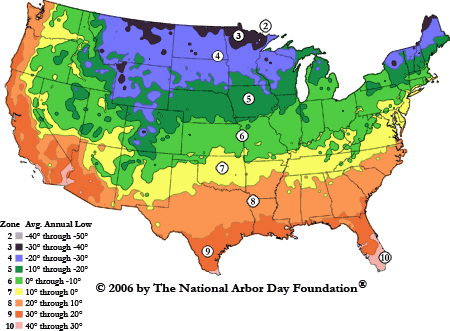
The first step in choosing a tree is to determine the type of tree appropriate for your property and your needs. Make sure that whatever tree you choose can flourish in the local climate and soil conditions. Be sure to consult with the hardiness zones.
What To Consider When Planting Trees:
- Size of Space: How big will the tree be in 20 years?
- Proximity to concrete and asphalt structures, foundations, and drainage structures: How far is the site from any buildings, sewers, sidewalks, or streets? Trees spread out above and below ground.
- Climate Control: Deciduous trees planted on the south, east or west perimeters of the property provide shade during summer and allow sunlight through in winter. Evergreen trees planted on the north and west perimeters of property serve as windbreakers and can help to cut heating costs in winter.
-Drainage: Consider the natural drainage of the land. Plant young trees in good quality, well-drained soil. Stagnant water pooling around roots lead to "root rot" which is caused by lack of available oxygen. You can test the drainage of your soil by digging a hole and filling it with water. If the water hasn't drained in a few hours, it is likely you have a drainage problem in that area and it is not a good idea to plant there unless you create raised beds with about 12"-18" of good quality top soil to plant in.
- Soil Quality: What is the quality of the soil? Has there been any chemical or petroleum spills? Is there nay new construction nearby? Construction material and rubble, along with chemical or petroleum in soils, alter soil fertility. If the soil is determined unsuitable for planting, it is a good idea to scrape all the bad soil away and replace with good quality top soil at a depth appropriate for the planting materials.
- Personal Taste: Trees enhance the attractiveness of your property. Determine what trees you admire and what types you prefer in your yard. What will fill-in the space over time? You can consult a landscape designer during this process if you are unsure of what is appropriate. Vision Landscaping has full time landscape architects on staff to help you with any of these issues.
Types of Trees
Trees purchased from local nurseries and retail stores come in three types:
- Balled and Burlapped: The roots of the tree and the ball of soil containing the roots are bound in burlap.
- Container-Grown: The plant is sold in the container in which it was grown.
- Bare-Rooted: The plant is sold with the roots exposed. Not very common with trees.
When to Plant in Georgia:
Because we do not experience harsh winters, planting can occur during the winter while trees are dormant. Weather conditions are cool and allow plants to establish roots in the new location before spring rains and summer heat stimulate new top growth.
Watering:
Water newly planted trees at time of planting. Also, during the first growing season, water at least once a week during the absence of rain. However, care should be taken not to over-water becuase this could result in oxygen deprivation.
To see if you are watering your tree adequately, dig down 6"-8" at the edge of the planting hole. If the soil at that depth crumble in your hand, the tree needs water. Adequately moistened soil should form a ball when squeezed.
Mulching:
Mulch can be applied to the area around a newly planted tree to conserve moisture and promote water and air penetration. Do not, under any circumstances, cover the area surrounding the tree with plastic sheeting since air and water movement are prevented. Porous landscape material can be used.
Fertilizer:
All soils have their own history, so it can be beneficial to have the soil analyzed beforehand. Plants suffer root loss and stress associated with movement between ideal nursery grown conditions and the final planting, so adding fertilizer to the soil at the time of planting can compensate for root loss during planting and can alleviate transplant shock.
Now, remember that is takes at least a year for trees to adjust to their new living conditions. During this time, make sure they are being watered adequately and fertilize if necessary.
Trees are important to our environment and important to us as a species. They provide oxygen for us to breathe and filter all the bad carbon dioxide out of our air. They serve as the only source of nutrition to many animals and other organisms.
Because trees play such a visible and important role in our landscapes, care must be taken to ensure proper growth conditions are maintained. Trees are far more difficult,and expensive, to replace, once mature in the landscape, than other plants. However, with some proper instruction and planning, trees can be easily maintained.
The first step in choosing a tree is to determine the type of tree appropriate for your property and your needs. Make sure that whatever tree you choose can flourish in the local climate and soil conditions. Be sure to consult with the hardiness zones.
What To Consider When Planting Trees:
- Size of Space: How big will the tree be in 20 years?
- Proximity to concrete and asphalt structures, foundations, and drainage structures: How far is the site from any buildings, sewers, sidewalks, or streets? Trees spread out above and below ground.
- Climate Control: Deciduous trees planted on the south, east or west perimeters of the property provide shade during summer and allow sunlight through in winter. Evergreen trees planted on the north and west perimeters of property serve as windbreakers and can help to cut heating costs in winter.
-Drainage: Consider the natural drainage of the land. Plant young trees in good quality, well-drained soil. Stagnant water pooling around roots lead to "root rot" which is caused by lack of available oxygen. You can test the drainage of your soil by digging a hole and filling it with water. If the water hasn't drained in a few hours, it is likely you have a drainage problem in that area and it is not a good idea to plant there unless you create raised beds with about 12"-18" of good quality top soil to plant in.
- Soil Quality: What is the quality of the soil? Has there been any chemical or petroleum spills? Is there nay new construction nearby? Construction material and rubble, along with chemical or petroleum in soils, alter soil fertility. If the soil is determined unsuitable for planting, it is a good idea to scrape all the bad soil away and replace with good quality top soil at a depth appropriate for the planting materials.
- Personal Taste: Trees enhance the attractiveness of your property. Determine what trees you admire and what types you prefer in your yard. What will fill-in the space over time? You can consult a landscape designer during this process if you are unsure of what is appropriate. Vision Landscaping has full time landscape architects on staff to help you with any of these issues.
Types of Trees
Trees purchased from local nurseries and retail stores come in three types:
- Balled and Burlapped: The roots of the tree and the ball of soil containing the roots are bound in burlap.
- Container-Grown: The plant is sold in the container in which it was grown.
- Bare-Rooted: The plant is sold with the roots exposed. Not very common with trees.
When to Plant in Georgia:
Because we do not experience harsh winters, planting can occur during the winter while trees are dormant. Weather conditions are cool and allow plants to establish roots in the new location before spring rains and summer heat stimulate new top growth.
Watering:
Water newly planted trees at time of planting. Also, during the first growing season, water at least once a week during the absence of rain. However, care should be taken not to over-water becuase this could result in oxygen deprivation.
To see if you are watering your tree adequately, dig down 6"-8" at the edge of the planting hole. If the soil at that depth crumble in your hand, the tree needs water. Adequately moistened soil should form a ball when squeezed.
Mulching:
Mulch can be applied to the area around a newly planted tree to conserve moisture and promote water and air penetration. Do not, under any circumstances, cover the area surrounding the tree with plastic sheeting since air and water movement are prevented. Porous landscape material can be used.
Fertilizer:
All soils have their own history, so it can be beneficial to have the soil analyzed beforehand. Plants suffer root loss and stress associated with movement between ideal nursery grown conditions and the final planting, so adding fertilizer to the soil at the time of planting can compensate for root loss during planting and can alleviate transplant shock.
Now, remember that is takes at least a year for trees to adjust to their new living conditions. During this time, make sure they are being watered adequately and fertilize if necessary.
Thursday, December 3, 2009
Holiday Yard Cleanup
As the Holidays are quickly approaching, residents are less concerned with the overall look of their yards and more concerned with shopping, decorating for Christmas and planning parties and gatherings to celebrate the Holidays. Letting your yards go during the Holidays may seem like the easier thing to do, but did you know that Brown Recluse spiders live in piles of leaves and brush located around your house? Not to mention that mice and moles love these areas as well. Also, leaves piled up on top of your grass blocks out sunlight, potentially killing the grass underneath. It is equally important to clean your gutters. Over time, organic matter builds up along the gutter walls & after so long, things will begin to grow. Small trees and ferns will even take root if enough matter has gotten clogged in the gutters. If not kept clean, gutters will break and leak very easily. Vision Landscaping is the company to call to help oyu get your yard looking good this Holiday season. While your busy shopping and wrapping, we'll get busy mowing your grass, removing your leaves, cleaning gutters, pruning trees and bushes and removing weeds from lawn, beds and other areas. Call us today to schedule your Holiday Yard Cleanup!!
Friday, October 30, 2009
Drainage Issues Caused by Recent Heavy rains in Georgia
Drainage issues are very common in clay soil areas such as northeast Georgia and due to recent heavy rains and localized flooding, these issues are on the rise. These days, more and more people are dealing with drainage problems in their landscapes and making it a priority to contact a drainage consultant in order to deal with the issues properly. Vision Landscaping has had a record number of calls concerning drainage problems in the past two months.
The first step to correcting a drainage problem is to find where the water is coming from. The best time to do this is directly after a major downpour. Once the storm has cleared and it is safe to go outside, locate your gutters and downspouts. Determine how much water is flowing and where it is going. Most often, gutters and downspouts are installed on the home where it is most convenient, not where it is best for good site drainage. Is the water flowing away from the house, back toward the house or under a crawl space? Is the water from the downspout forming a stream that is running through your landscape or forming large puddles that are settling in your landscape?
Another common cause of poor site drainage is improper site grading before construction or landscape installation. Land must be graded so that water runs down hill away from the home or site where is puddles. Determine which way the slope of your property is going. You can purchase an inexpensive level at your local hardware store.
Another main cause pf poor drainage is the type of soil. Some soils, particularly clay soils, drain more slowly than other soils. With heavy rains and drainage issues, comes soil erosion problems. One way to test your soil to see if you have drainage issues is to dig a hole about 8 to 12 inches deep, fill full of water and let it drain completely. Wait a day and fill it again. Record the time it takes to drain completely out. If it drains within one hour, you have great drainage. If it takes a few hours, you have adequate drainage. If it takes more than ten to twelve hours or even overnight, you have a drainage problem.
Whatever the level of concern, Vision Landscaping can diagnose, offer advice and repair any drainage issue, problem or concern you may be having in your landscape.
Visit our website at www.vision-landscaping.com.
Written by: Mandy Reese, Vision Landscaping
The first step to correcting a drainage problem is to find where the water is coming from. The best time to do this is directly after a major downpour. Once the storm has cleared and it is safe to go outside, locate your gutters and downspouts. Determine how much water is flowing and where it is going. Most often, gutters and downspouts are installed on the home where it is most convenient, not where it is best for good site drainage. Is the water flowing away from the house, back toward the house or under a crawl space? Is the water from the downspout forming a stream that is running through your landscape or forming large puddles that are settling in your landscape?
Another common cause of poor site drainage is improper site grading before construction or landscape installation. Land must be graded so that water runs down hill away from the home or site where is puddles. Determine which way the slope of your property is going. You can purchase an inexpensive level at your local hardware store.
Another main cause pf poor drainage is the type of soil. Some soils, particularly clay soils, drain more slowly than other soils. With heavy rains and drainage issues, comes soil erosion problems. One way to test your soil to see if you have drainage issues is to dig a hole about 8 to 12 inches deep, fill full of water and let it drain completely. Wait a day and fill it again. Record the time it takes to drain completely out. If it drains within one hour, you have great drainage. If it takes a few hours, you have adequate drainage. If it takes more than ten to twelve hours or even overnight, you have a drainage problem.
Whatever the level of concern, Vision Landscaping can diagnose, offer advice and repair any drainage issue, problem or concern you may be having in your landscape.
Visit our website at www.vision-landscaping.com.
Written by: Mandy Reese, Vision Landscaping
Subscribe to:
Posts (Atom)