Yesterday on I-24 north of Chattanooga, TN a giant sink hole suddenly opened up that was 25 feet wide, 25 feet long, and 20 feet deep. Luckily no one was hurt but this got us thinking... What are the chances of this happening in your back yard?
Sink holes occur when the rock below the land surface is limestone , salt beds or a rock that can naturally be dissolved by groundwater. Caverns begin to develop as the rock below erodes thereby weakening the structural support of the rock. When these caverns get too big the land suddenly collapses, taking everything on top with it.
The most damage from sinkholes tends to occur in Florida, Texas, Alabama, Missouri, Kentucky, Tennessee, and Pennsylvania.While Georgia does not have a lot of the susceptible rock
we are not out of the clear yet! Many of the recent sinkholes are man made and are related to poor land use practices such as changing the natural water drainage patterns.
Sink holes don't have to be enormous to be destructive they can be just a few feet wide in your backyard.
Here are a few signs that you might have a sinkhole forming...
1. Cracks in interior joints around doors or windows,
2. Large depressions in your yard or street
3. Deep cracks and separation of paved walks and streets.
4. Sediment in your water
5. Observation of an actual cavity forming.
If you see any of these symptoms contact a landscape professional.
(ga.water.usgs.gov , sinkhole.org)
Showing posts with label georgia soil conditions. Show all posts
Wednesday, May 19, 2010
Friday, December 11, 2009
Tree Planting Season is NOW! WHat do I do??
Planting trees can enhance your landscape in many ways. Trees provide shade during the summer and wind protection during the winter. They add beauty and value to your property at the same time. They can also provide fun and adventure to children and privacy from nosy neighbor's prying eyes.
Trees are important to our environment and important to us as a species. They provide oxygen for us to breathe and filter all the bad carbon dioxide out of our air. They serve as the only source of nutrition to many animals and other organisms.
Because trees play such a visible and important role in our landscapes, care must be taken to ensure proper growth conditions are maintained. Trees are far more difficult,and expensive, to replace, once mature in the landscape, than other plants. However, with some proper instruction and planning, trees can be easily maintained.
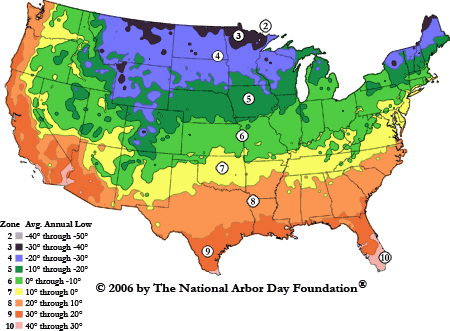
The first step in choosing a tree is to determine the type of tree appropriate for your property and your needs. Make sure that whatever tree you choose can flourish in the local climate and soil conditions. Be sure to consult with the hardiness zones.
What To Consider When Planting Trees:
- Size of Space: How big will the tree be in 20 years?
- Proximity to concrete and asphalt structures, foundations, and drainage structures: How far is the site from any buildings, sewers, sidewalks, or streets? Trees spread out above and below ground.
- Climate Control: Deciduous trees planted on the south, east or west perimeters of the property provide shade during summer and allow sunlight through in winter. Evergreen trees planted on the north and west perimeters of property serve as windbreakers and can help to cut heating costs in winter.
-Drainage: Consider the natural drainage of the land. Plant young trees in good quality, well-drained soil. Stagnant water pooling around roots lead to "root rot" which is caused by lack of available oxygen. You can test the drainage of your soil by digging a hole and filling it with water. If the water hasn't drained in a few hours, it is likely you have a drainage problem in that area and it is not a good idea to plant there unless you create raised beds with about 12"-18" of good quality top soil to plant in.
- Soil Quality: What is the quality of the soil? Has there been any chemical or petroleum spills? Is there nay new construction nearby? Construction material and rubble, along with chemical or petroleum in soils, alter soil fertility. If the soil is determined unsuitable for planting, it is a good idea to scrape all the bad soil away and replace with good quality top soil at a depth appropriate for the planting materials.
- Personal Taste: Trees enhance the attractiveness of your property. Determine what trees you admire and what types you prefer in your yard. What will fill-in the space over time? You can consult a landscape designer during this process if you are unsure of what is appropriate. Vision Landscaping has full time landscape architects on staff to help you with any of these issues.
Types of Trees
Trees purchased from local nurseries and retail stores come in three types:
- Balled and Burlapped: The roots of the tree and the ball of soil containing the roots are bound in burlap.
- Container-Grown: The plant is sold in the container in which it was grown.
- Bare-Rooted: The plant is sold with the roots exposed. Not very common with trees.
When to Plant in Georgia:
Because we do not experience harsh winters, planting can occur during the winter while trees are dormant. Weather conditions are cool and allow plants to establish roots in the new location before spring rains and summer heat stimulate new top growth.
Watering:
Water newly planted trees at time of planting. Also, during the first growing season, water at least once a week during the absence of rain. However, care should be taken not to over-water becuase this could result in oxygen deprivation.
To see if you are watering your tree adequately, dig down 6"-8" at the edge of the planting hole. If the soil at that depth crumble in your hand, the tree needs water. Adequately moistened soil should form a ball when squeezed.
Mulching:
Mulch can be applied to the area around a newly planted tree to conserve moisture and promote water and air penetration. Do not, under any circumstances, cover the area surrounding the tree with plastic sheeting since air and water movement are prevented. Porous landscape material can be used.
Fertilizer:
All soils have their own history, so it can be beneficial to have the soil analyzed beforehand. Plants suffer root loss and stress associated with movement between ideal nursery grown conditions and the final planting, so adding fertilizer to the soil at the time of planting can compensate for root loss during planting and can alleviate transplant shock.
Now, remember that is takes at least a year for trees to adjust to their new living conditions. During this time, make sure they are being watered adequately and fertilize if necessary.
Trees are important to our environment and important to us as a species. They provide oxygen for us to breathe and filter all the bad carbon dioxide out of our air. They serve as the only source of nutrition to many animals and other organisms.
Because trees play such a visible and important role in our landscapes, care must be taken to ensure proper growth conditions are maintained. Trees are far more difficult,and expensive, to replace, once mature in the landscape, than other plants. However, with some proper instruction and planning, trees can be easily maintained.
The first step in choosing a tree is to determine the type of tree appropriate for your property and your needs. Make sure that whatever tree you choose can flourish in the local climate and soil conditions. Be sure to consult with the hardiness zones.
What To Consider When Planting Trees:
- Size of Space: How big will the tree be in 20 years?
- Proximity to concrete and asphalt structures, foundations, and drainage structures: How far is the site from any buildings, sewers, sidewalks, or streets? Trees spread out above and below ground.
- Climate Control: Deciduous trees planted on the south, east or west perimeters of the property provide shade during summer and allow sunlight through in winter. Evergreen trees planted on the north and west perimeters of property serve as windbreakers and can help to cut heating costs in winter.
-Drainage: Consider the natural drainage of the land. Plant young trees in good quality, well-drained soil. Stagnant water pooling around roots lead to "root rot" which is caused by lack of available oxygen. You can test the drainage of your soil by digging a hole and filling it with water. If the water hasn't drained in a few hours, it is likely you have a drainage problem in that area and it is not a good idea to plant there unless you create raised beds with about 12"-18" of good quality top soil to plant in.
- Soil Quality: What is the quality of the soil? Has there been any chemical or petroleum spills? Is there nay new construction nearby? Construction material and rubble, along with chemical or petroleum in soils, alter soil fertility. If the soil is determined unsuitable for planting, it is a good idea to scrape all the bad soil away and replace with good quality top soil at a depth appropriate for the planting materials.
- Personal Taste: Trees enhance the attractiveness of your property. Determine what trees you admire and what types you prefer in your yard. What will fill-in the space over time? You can consult a landscape designer during this process if you are unsure of what is appropriate. Vision Landscaping has full time landscape architects on staff to help you with any of these issues.
Types of Trees
Trees purchased from local nurseries and retail stores come in three types:
- Balled and Burlapped: The roots of the tree and the ball of soil containing the roots are bound in burlap.
- Container-Grown: The plant is sold in the container in which it was grown.
- Bare-Rooted: The plant is sold with the roots exposed. Not very common with trees.
When to Plant in Georgia:
Because we do not experience harsh winters, planting can occur during the winter while trees are dormant. Weather conditions are cool and allow plants to establish roots in the new location before spring rains and summer heat stimulate new top growth.
Watering:
Water newly planted trees at time of planting. Also, during the first growing season, water at least once a week during the absence of rain. However, care should be taken not to over-water becuase this could result in oxygen deprivation.
To see if you are watering your tree adequately, dig down 6"-8" at the edge of the planting hole. If the soil at that depth crumble in your hand, the tree needs water. Adequately moistened soil should form a ball when squeezed.
Mulching:
Mulch can be applied to the area around a newly planted tree to conserve moisture and promote water and air penetration. Do not, under any circumstances, cover the area surrounding the tree with plastic sheeting since air and water movement are prevented. Porous landscape material can be used.
Fertilizer:
All soils have their own history, so it can be beneficial to have the soil analyzed beforehand. Plants suffer root loss and stress associated with movement between ideal nursery grown conditions and the final planting, so adding fertilizer to the soil at the time of planting can compensate for root loss during planting and can alleviate transplant shock.
Now, remember that is takes at least a year for trees to adjust to their new living conditions. During this time, make sure they are being watered adequately and fertilize if necessary.
Subscribe to:
Posts (Atom)